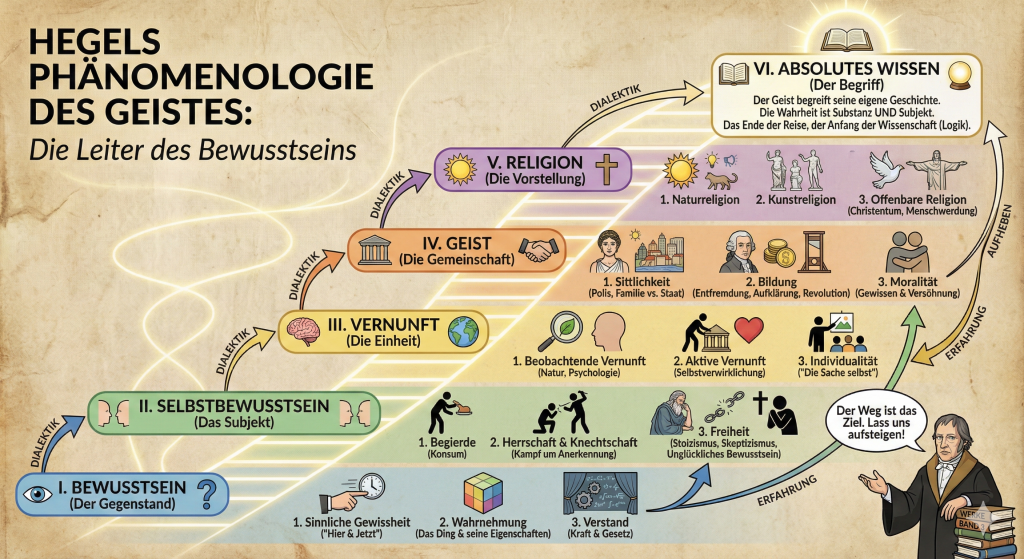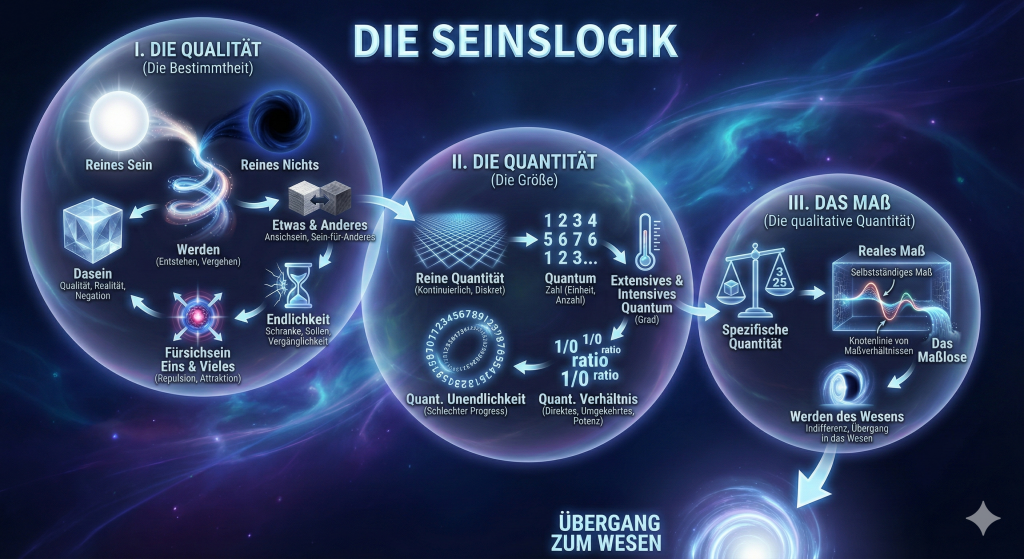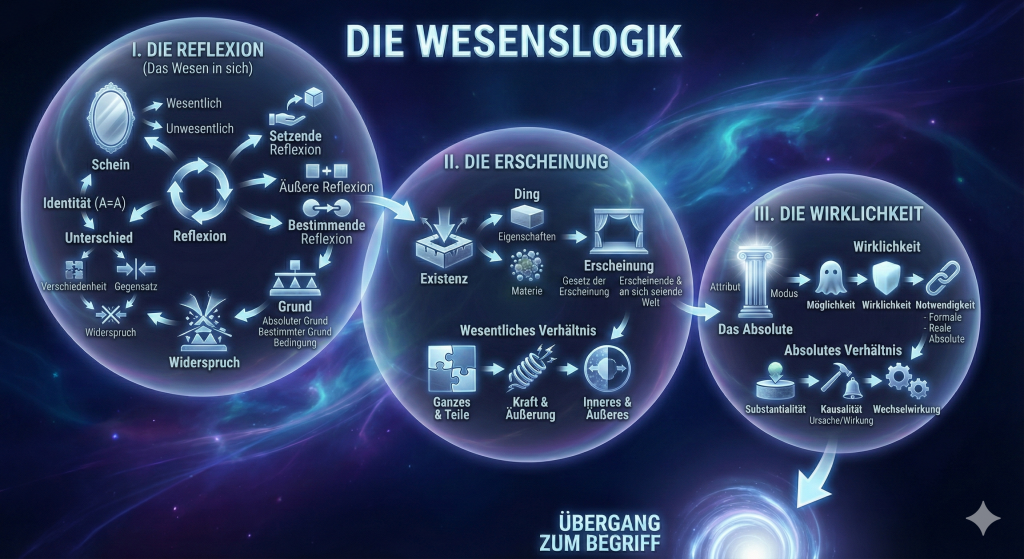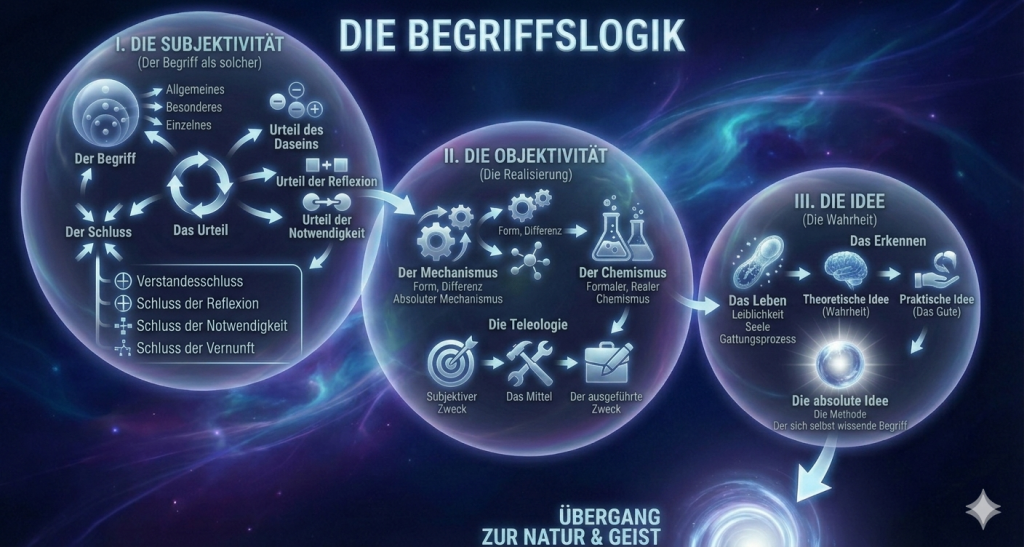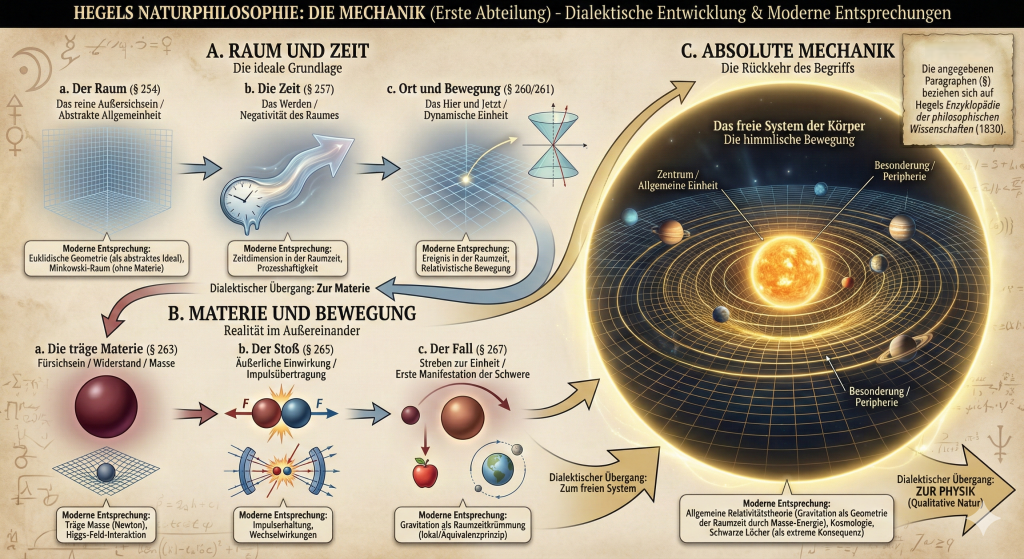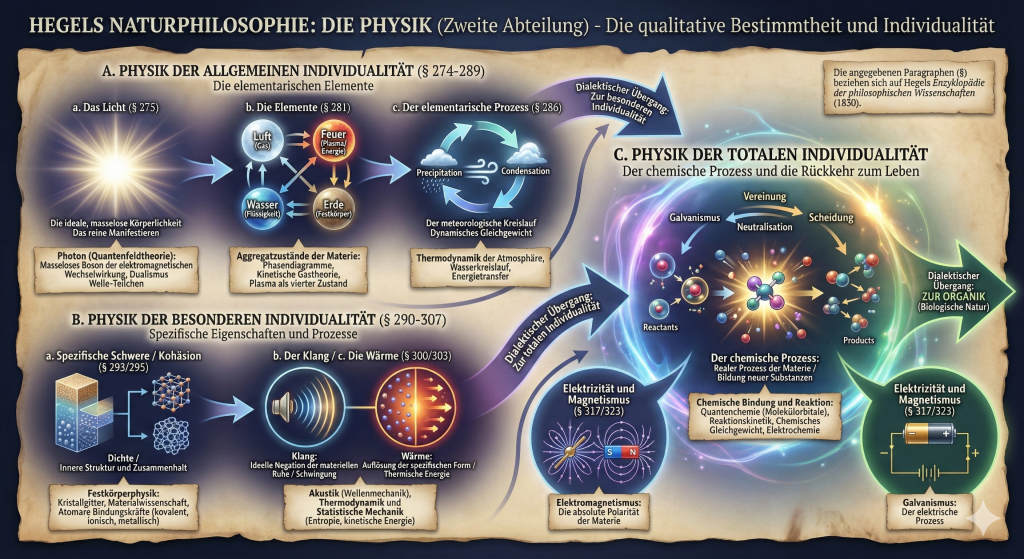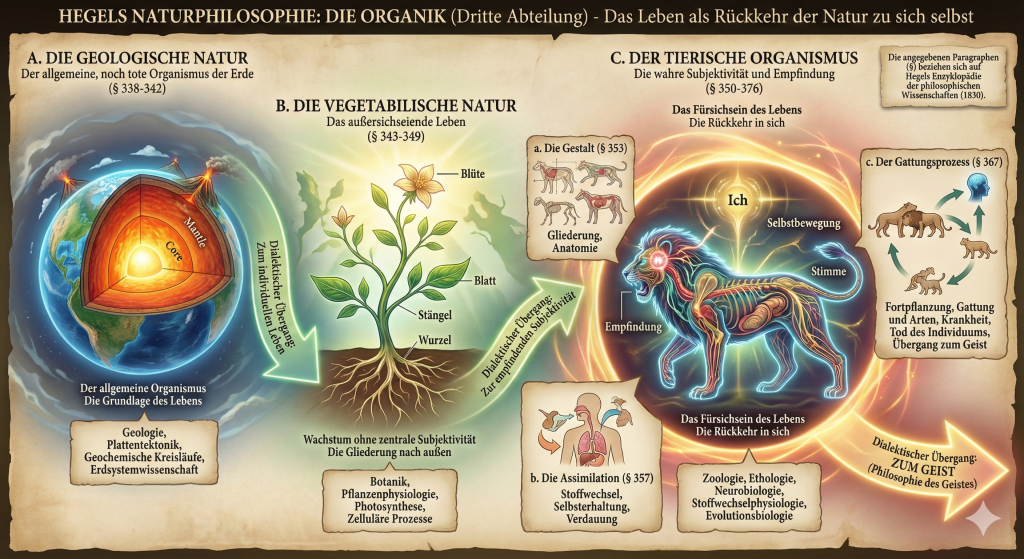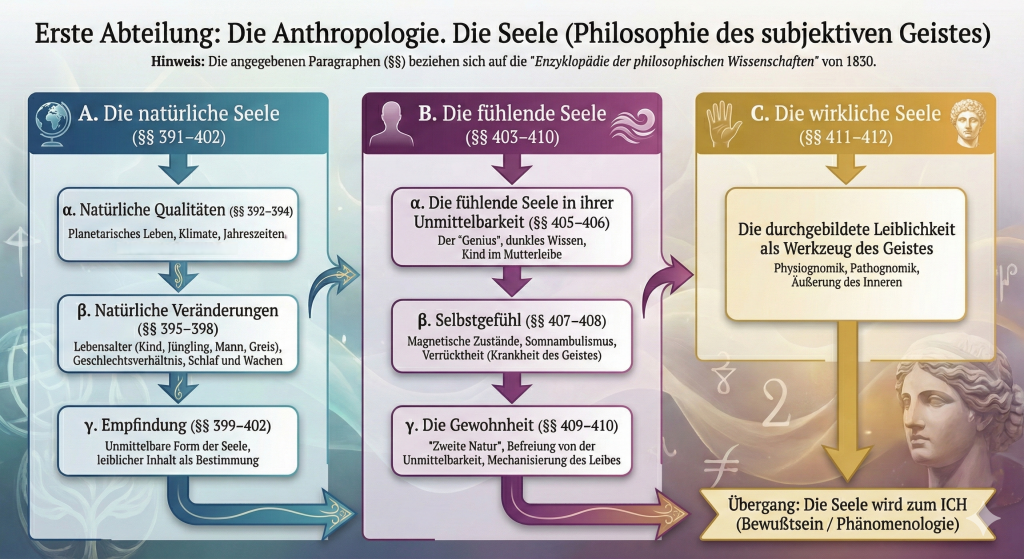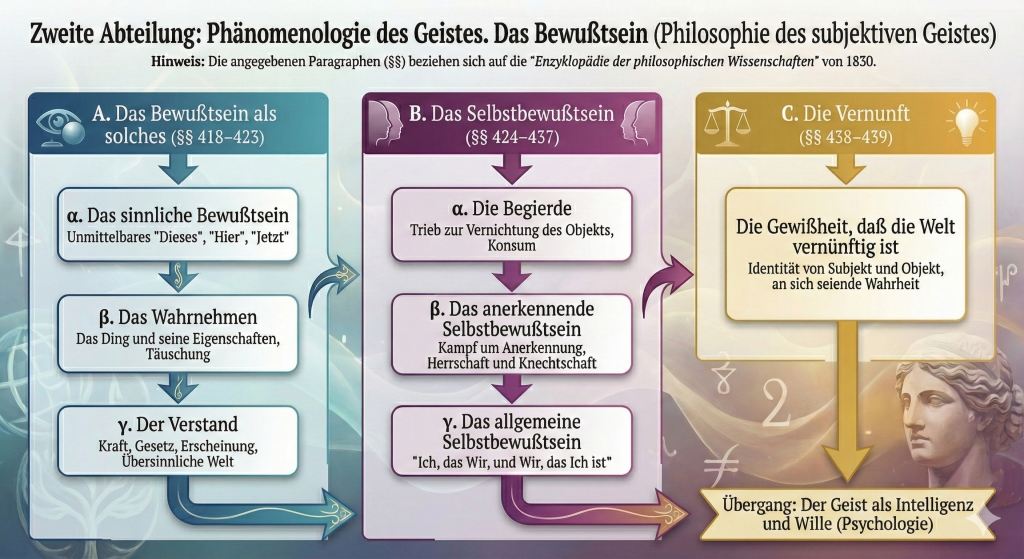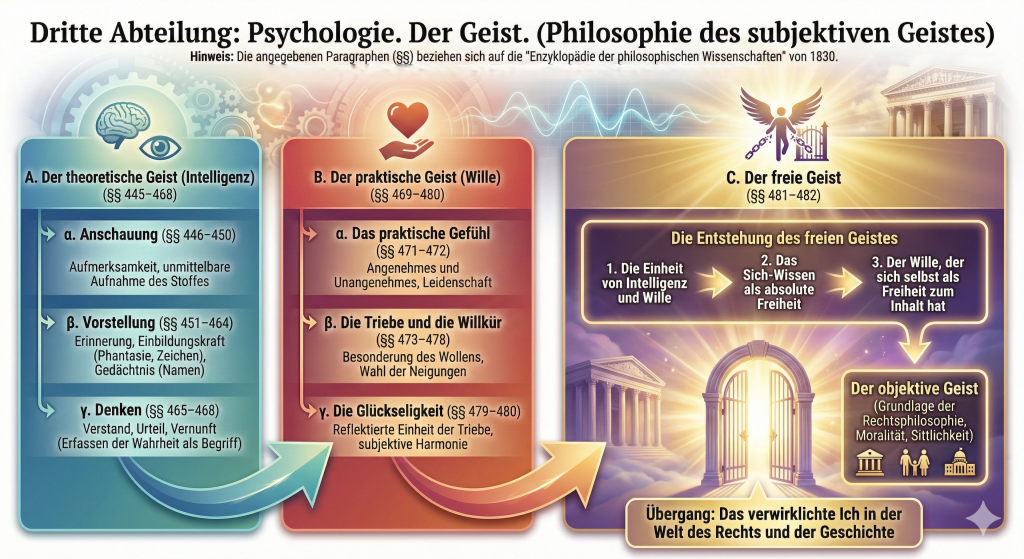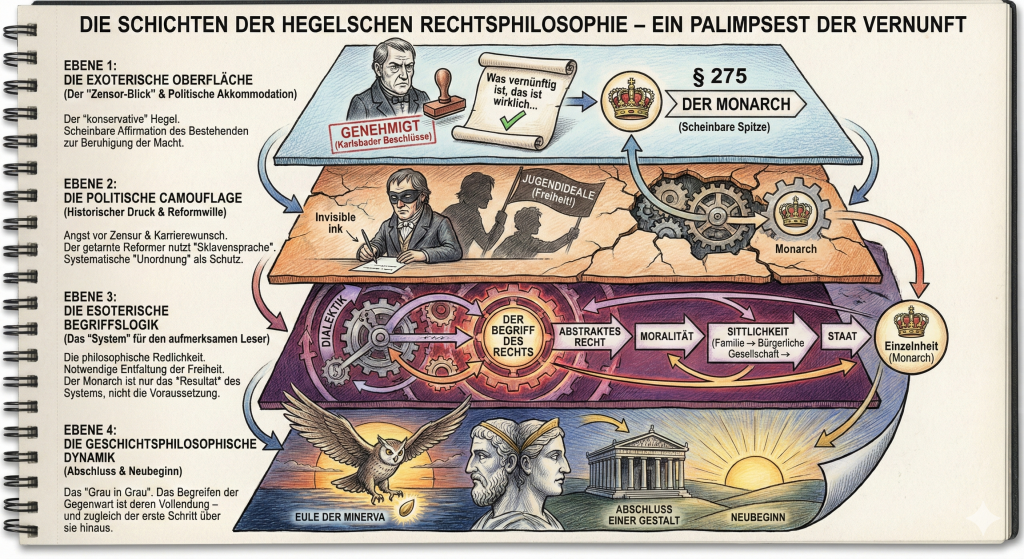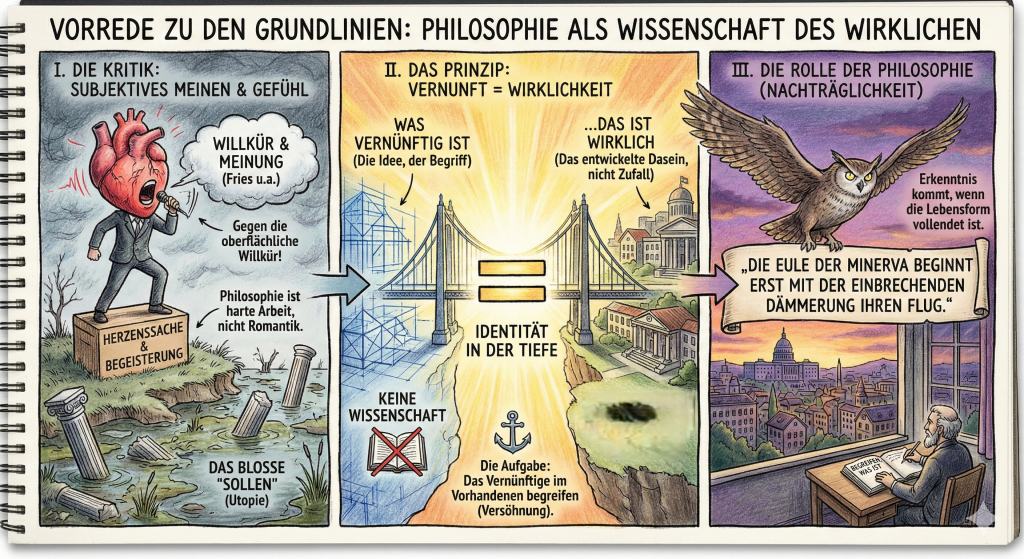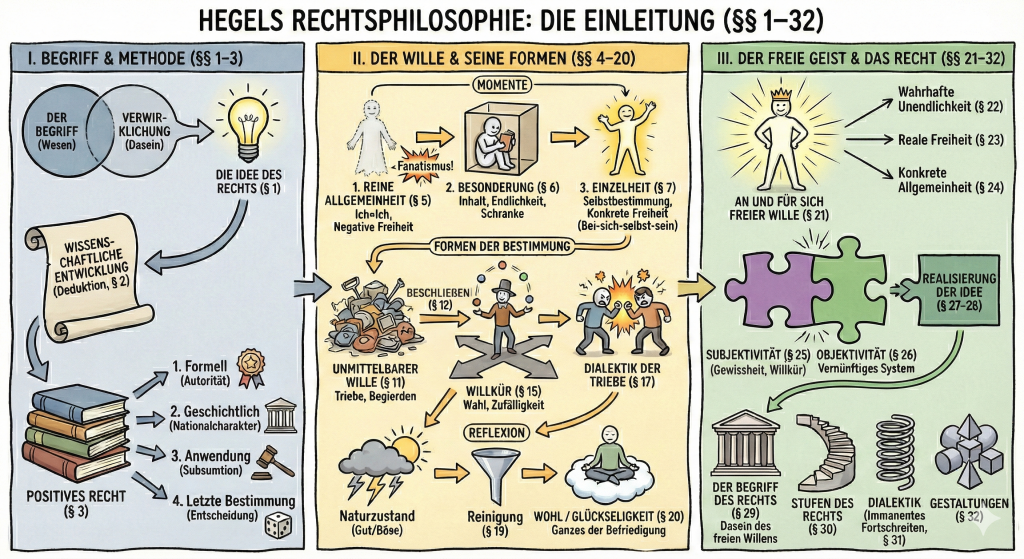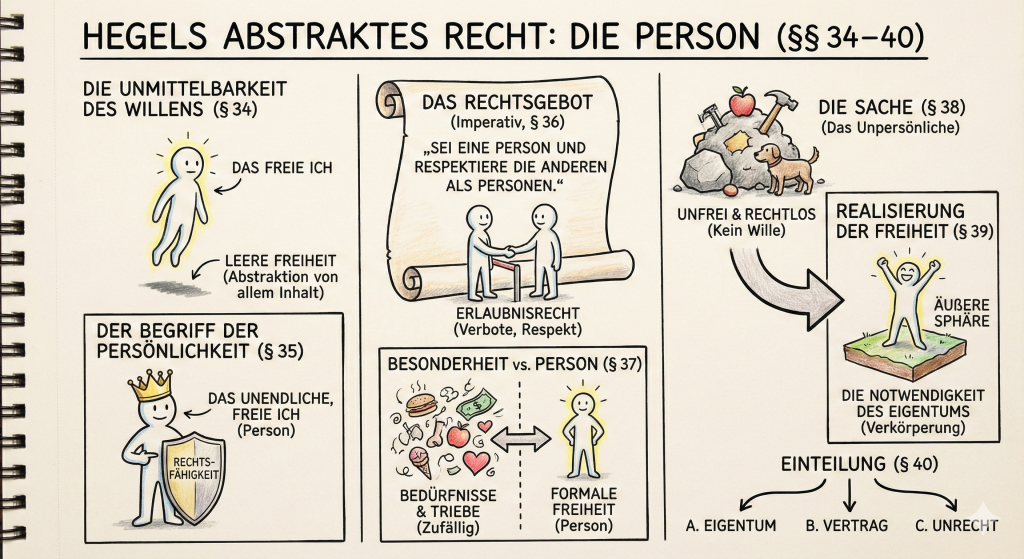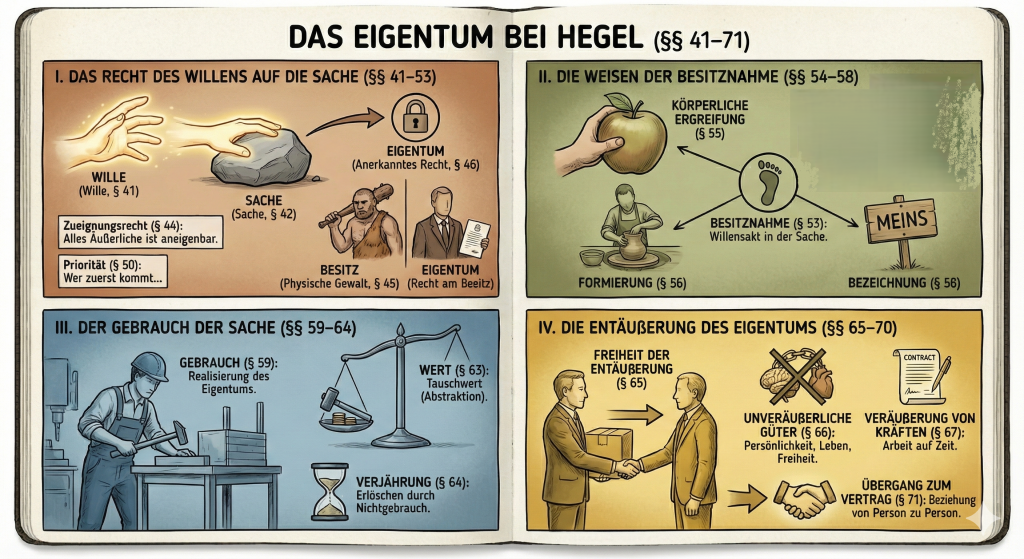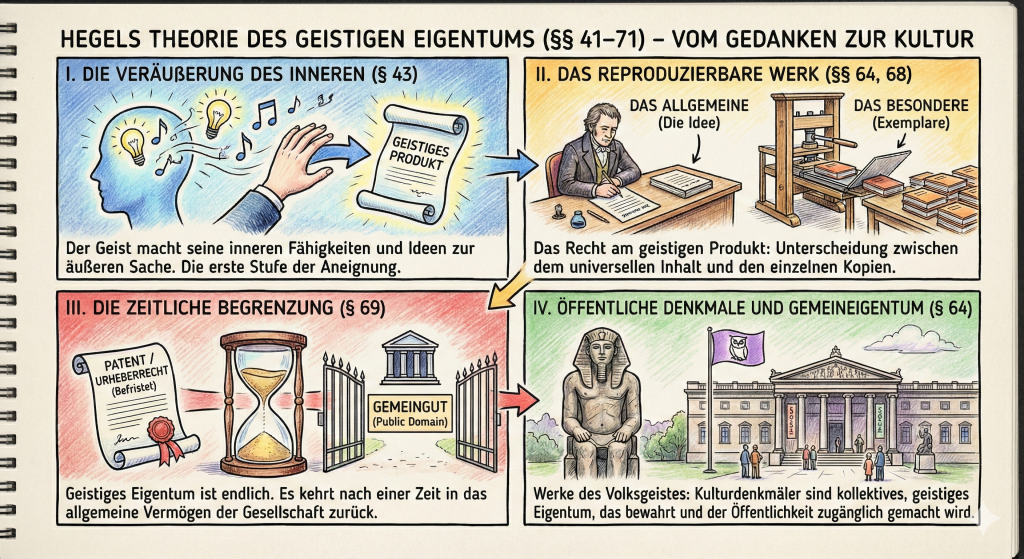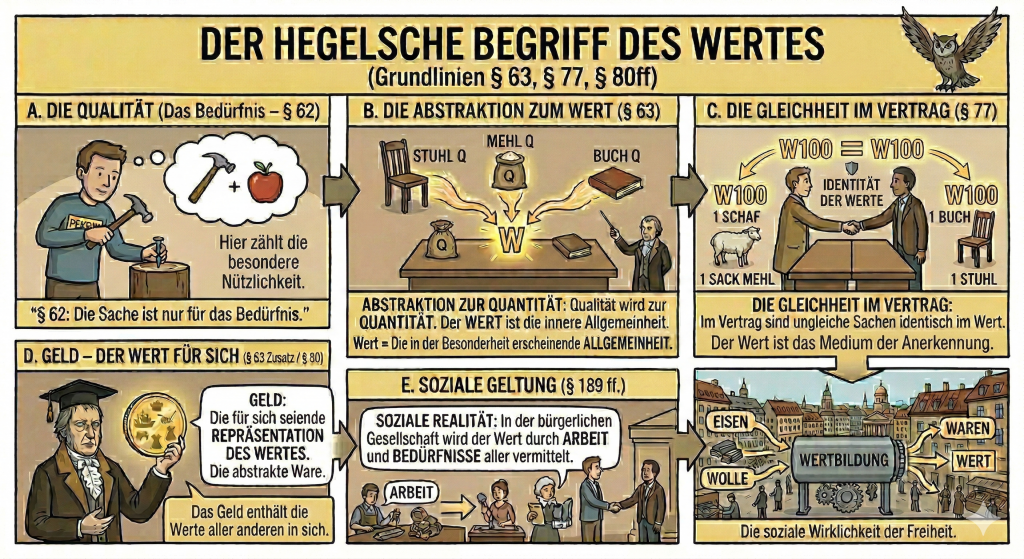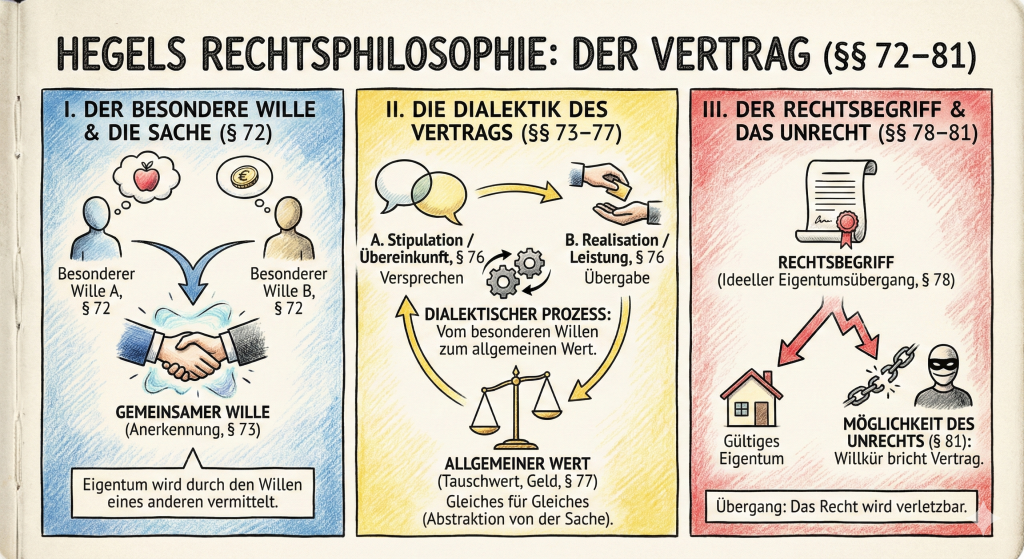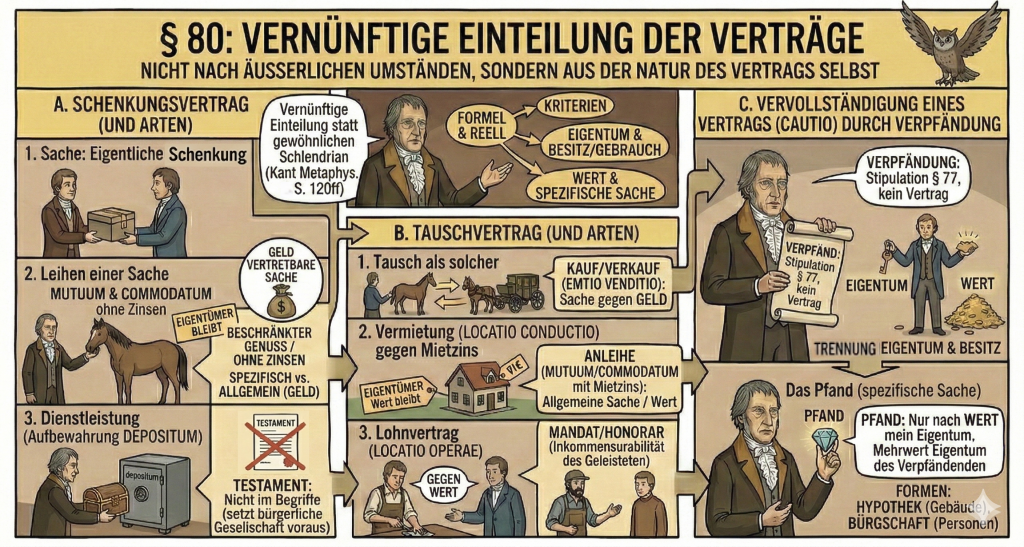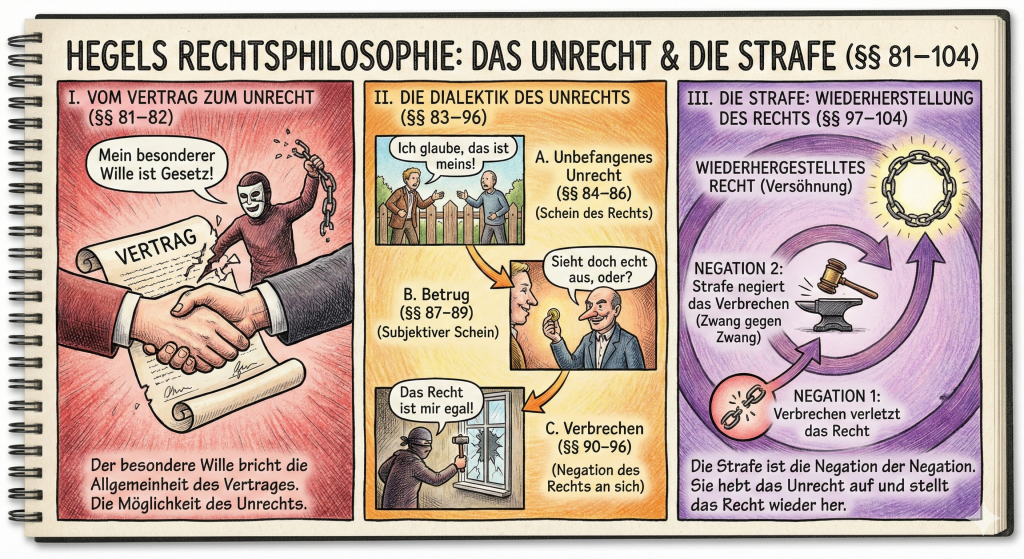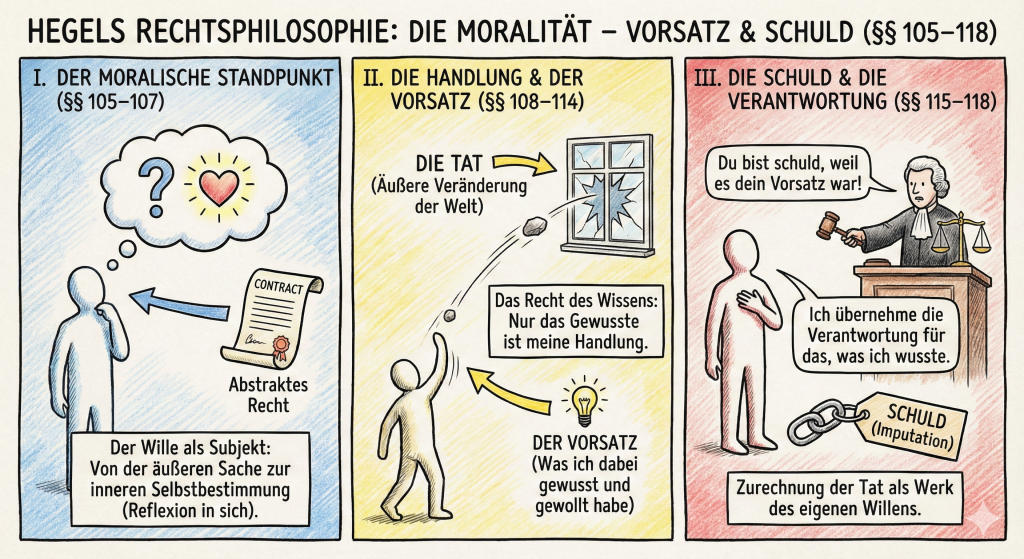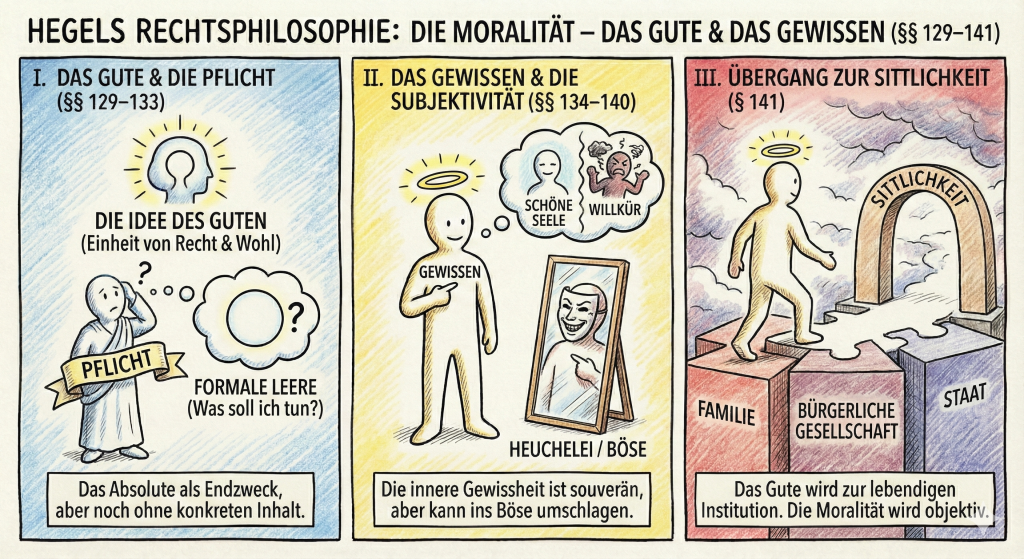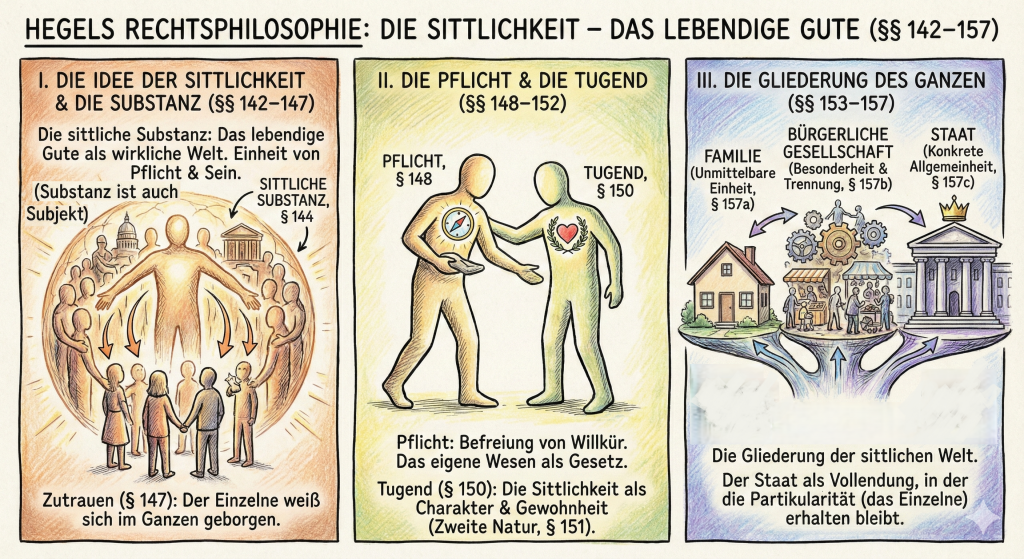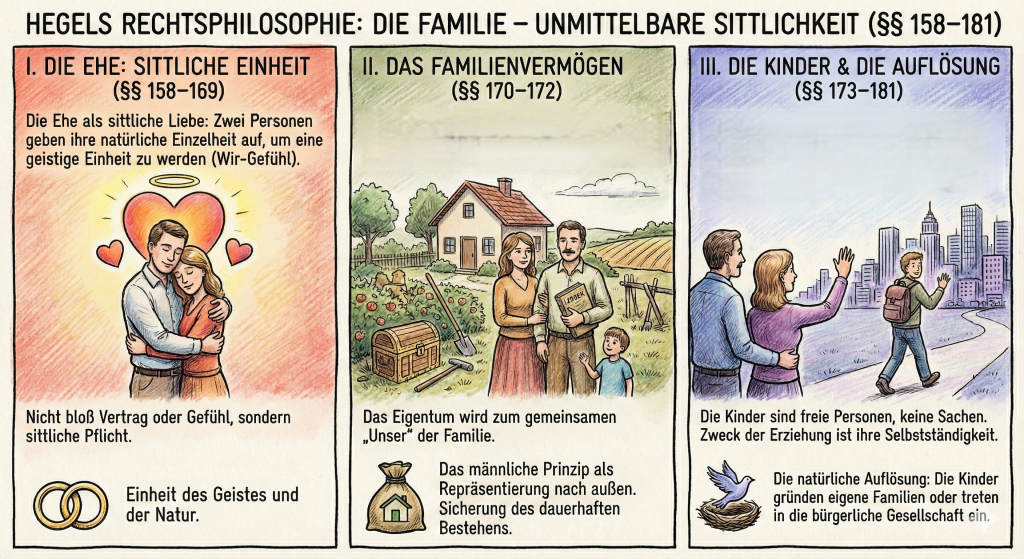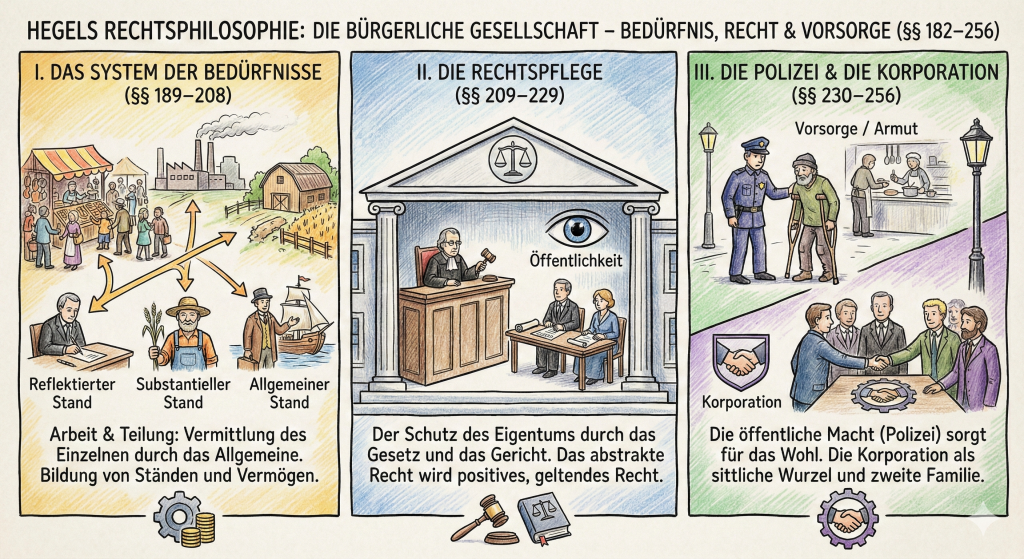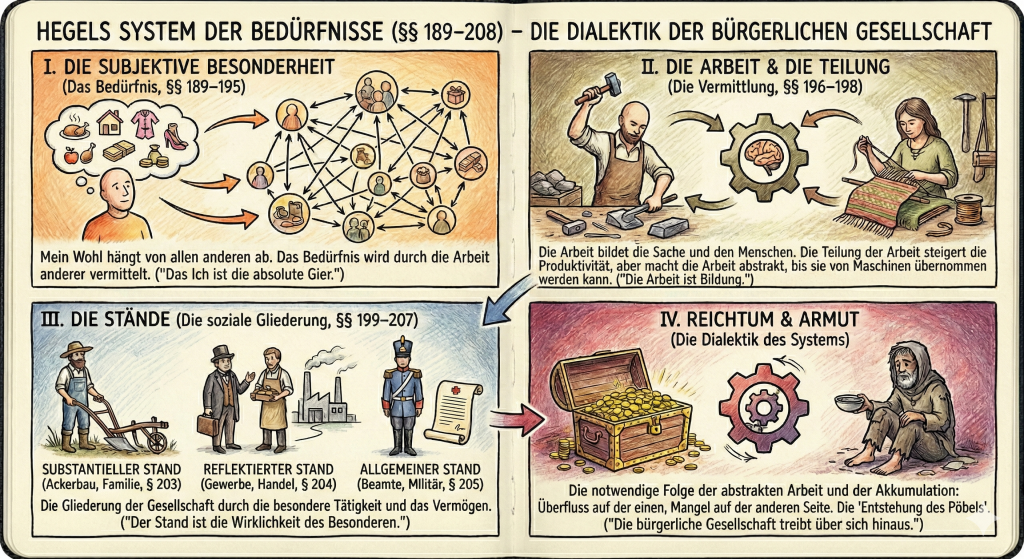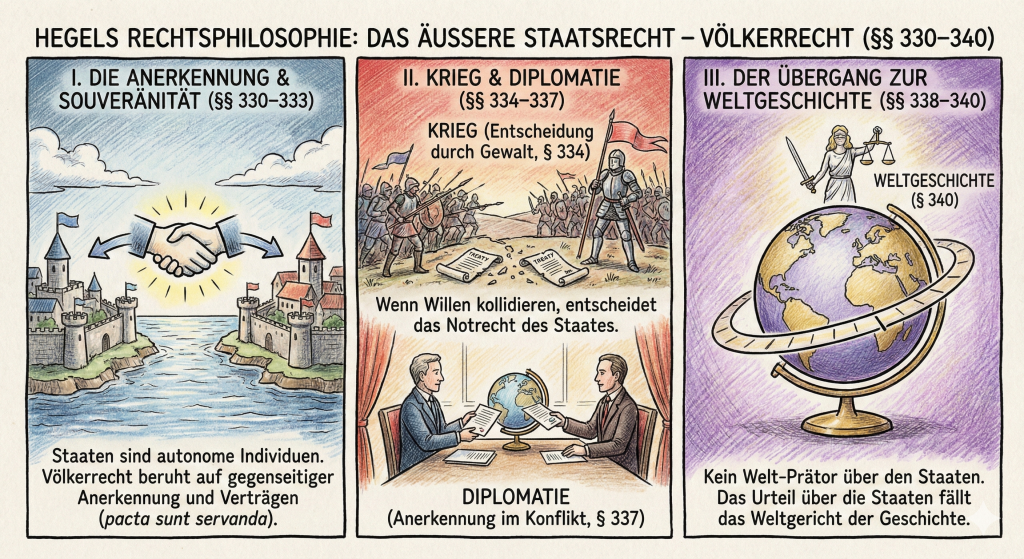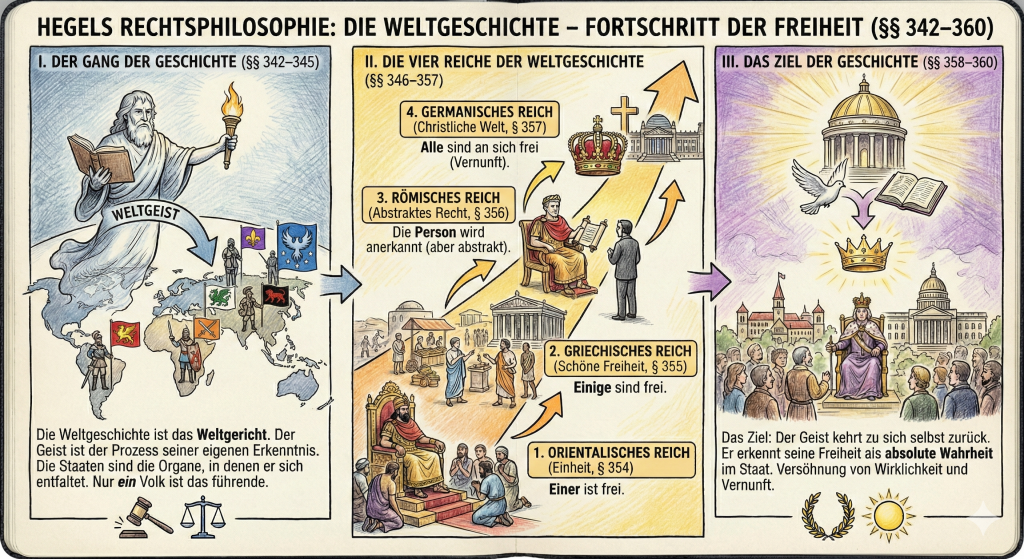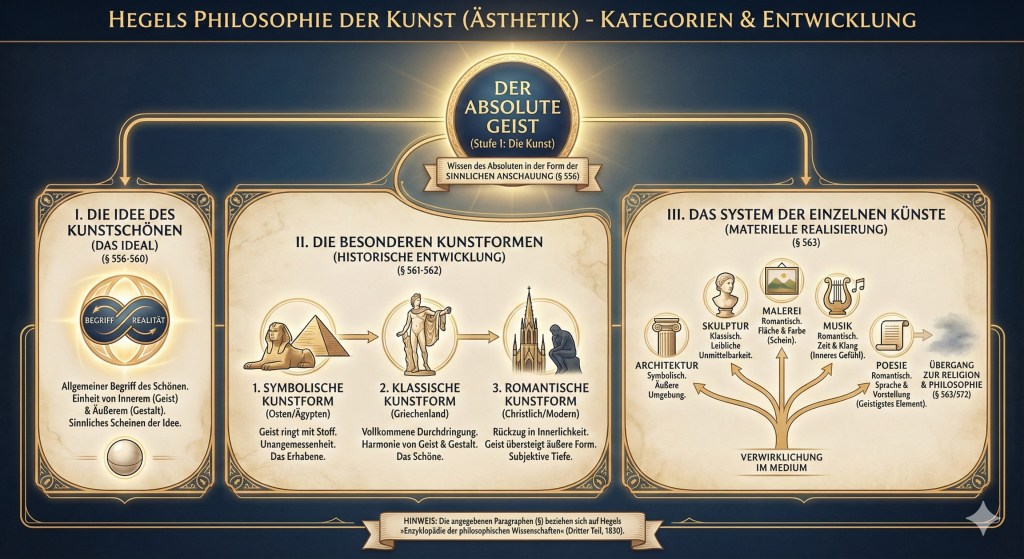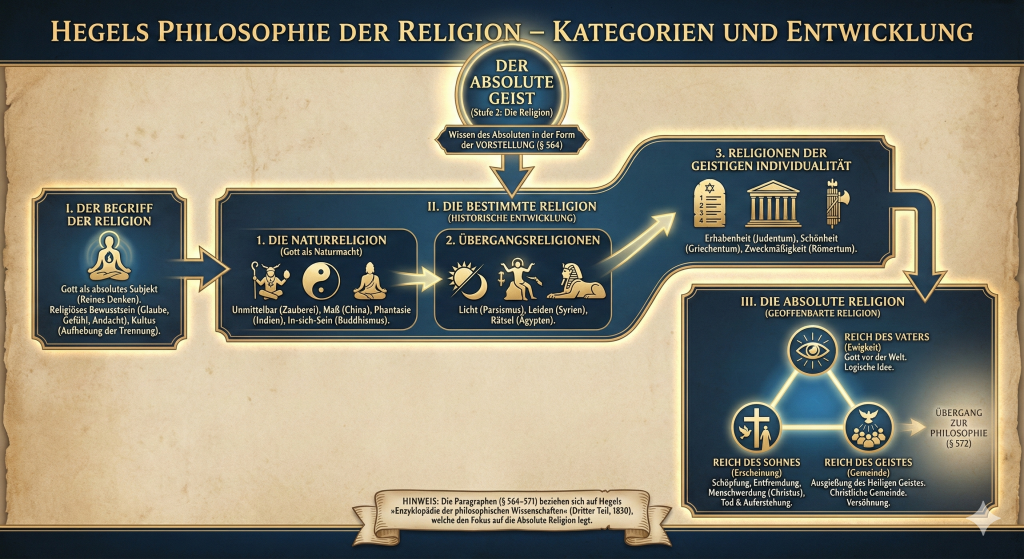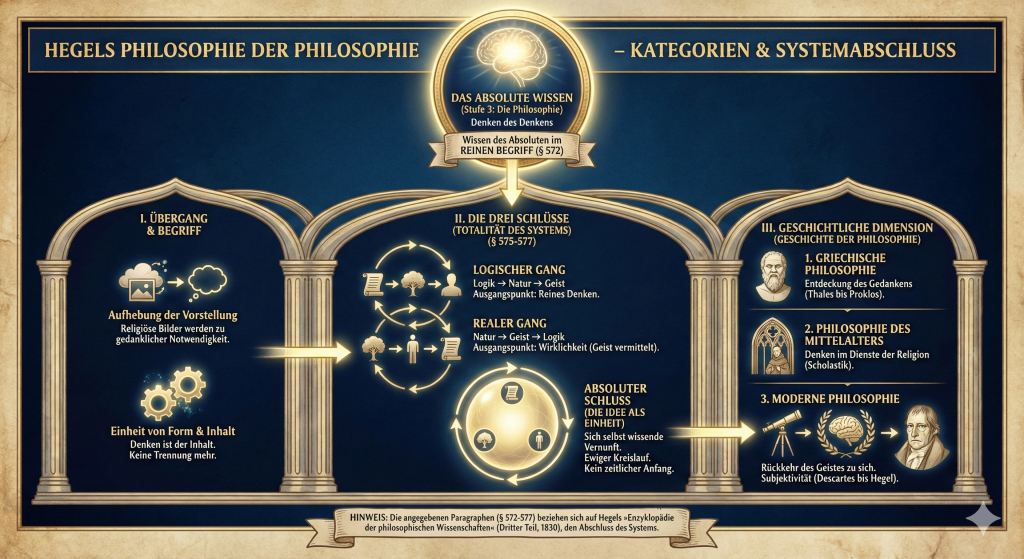
The infographics (below and elsewhere on this site) are meant as “signposts” or “maps.” But just as a map of a mountain range can never replace the actual climb and the experience of the heights, these images can never replace one’s own reflection and speculative comprehension. Please bear the following warnings in mind when studying the graphics:
1. The image is static, reason is movement In a graphic, concepts must be placed in boxes and connected with arrows. This creates the impression that “property,” “morality,” or “state” are finished, separate building blocks. In philosophy, however, nothing is “finished.” Truth is not a dead result but the process of its own becoming. One concept flows into the next; it negates itself and brings itself forth again in a higher form. Anyone who looks only at the image risks misunderstanding the living dialectic as a mechanical building-block system.
2. Representation vs. Concept Images (representations) use symbols – such as a crown for the prince, or a scale for the law. These symbols help the understanding “picture” something about the subject. But the concept demands more: it wants to grasp the inner necessity of why a thing must be as it is and cannot be otherwise. The image remains at the surface of intuition; thought must penetrate into the depth of logic. To “see” an image is easy; to “grasp” a thought requires what Hegel calls the “effort of the concept.”
3. The Danger of Simplification (Abstraction) Infographics must leave things out in order to remain clear. But every simplification is an abstraction that can distort the whole. Anyone who believes they have “understood” Hegel by looking at comics is deceiving themselves. The graphics can be misleading because they smooth over complex contradictions that, in the text, must be laboriously endured and resolved.
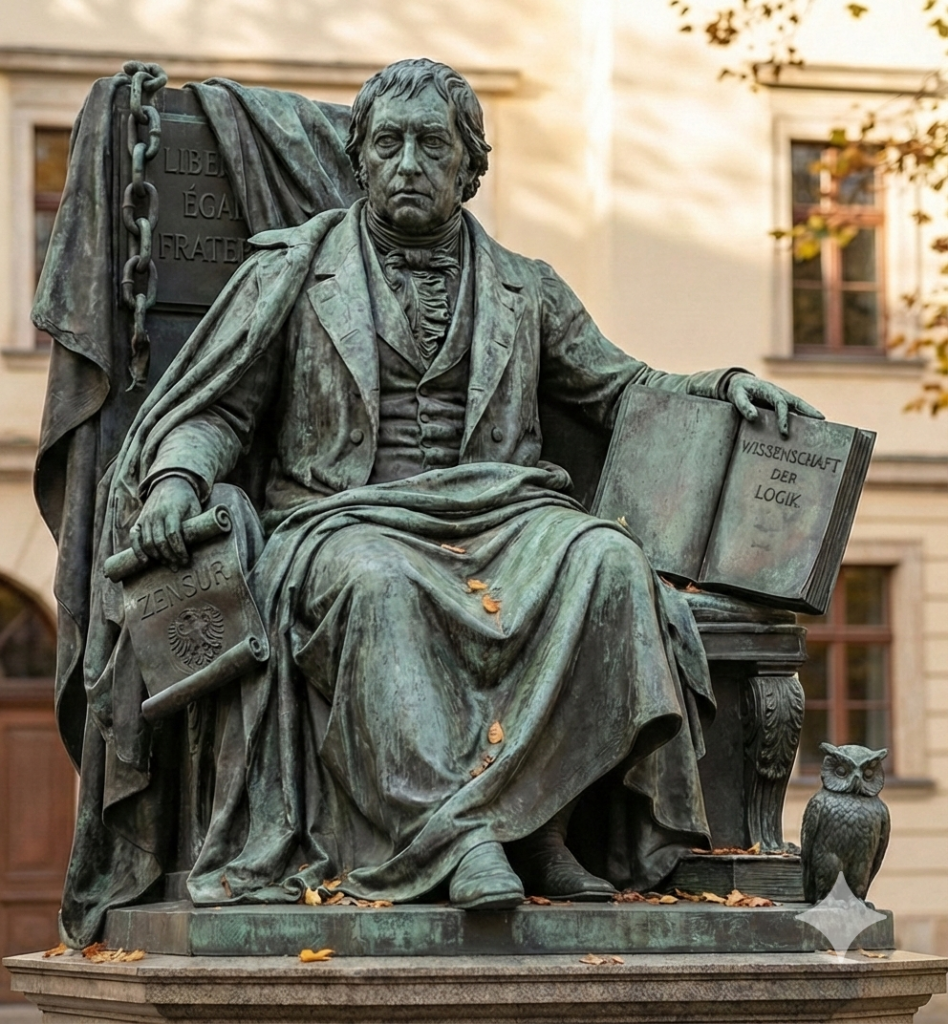
4. The “Owl of Minerva” Does Not Fly Within the Image True understanding arises only once one has walked the path of thought oneself – with all its doubts and detours. These graphics are merely aids to memory. They are the “silhouette” of reason, not reason itself.
Use these graphics to orient yourself when you lose the overview in the dense forest of paragraphs. But always return to the text and to your own thinking. Only in thinking through the paragraphs for oneself does spirit awaken to freedom. Let the images stimulate you, but do not let them do your thinking for you.
For the true is the whole – and the whole cannot be drawn, only comprehended.