

Introduction
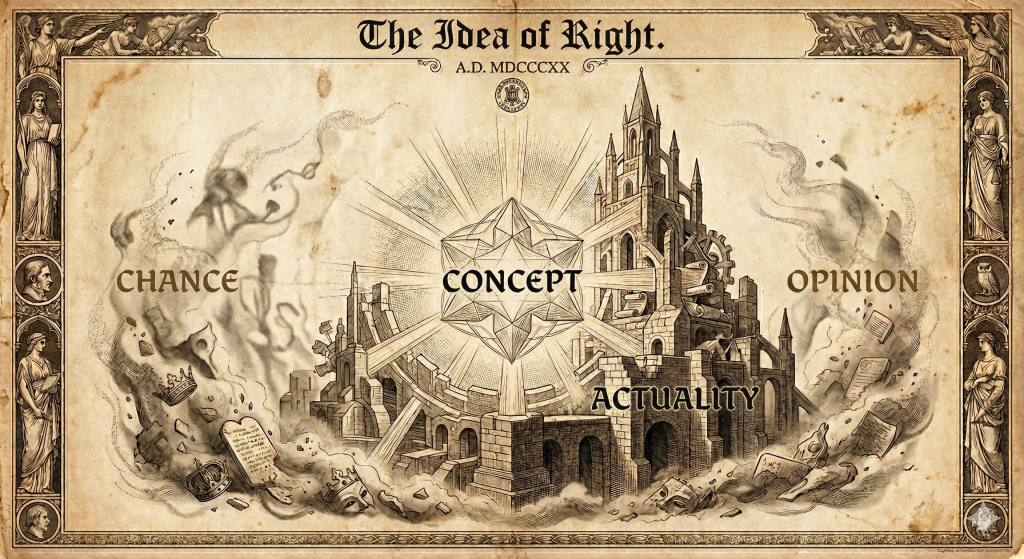
The philosophical science of right has as its object the “The idea in general is nothing other than the concept, the reality of the concept, and the unity of both.“ (Hegel, Lectures on Aesthetics, p. 145) of “This reality in general, as the existence of the free will, is right, which is to be taken comprehensively not only as limited legal right, but as the existence of all determinations of freedom.“ (§ 486 Enc. 1830), the concept of right and its actualization.
Philosophy has to do with ideas and therefore not with what are usually called mere concepts; on the contrary, it points out their one-sidedness and untruth, as well as the fact that the concept (not what is often heard called such, which is merely an abstract determination of the understanding) alone is what has actuality, and indeed in such a way that it gives this actuality to itself. Everything that is not this actuality posited by the concept itself is transient existence, external contingency, opinion, inessential appearance, untruth, illusion, etc. The configuration which the concept gives to itself in its actualization is, for the cognition of the concept itself, the other essential moment of the idea, distinguished from the form of being only as concept.


Leave a Reply
You must be logged in to post a comment.