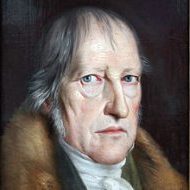
Transition of the Family into Civil Society
The family disintegrates, in a natural way, and essentially through the principle of personality, into a plurality of families, which conduct themselves, in general, as self-subsistent concrete persons, and thus externally toward one another. Or: the moments bound together in the unity of the family, as the ethical Idea still in its concept, must be released by it into self-subsistent reality — the stage of difference. Expressed at first abstractly, this yields the determination of particularity, which does indeed relate itself to universality, so that this universality is its — but only still inward — ground, and is, for that reason, present in the particular only in a formal way, merely shining into it. This relationship of reflection therefore represents, at first, the loss of the ethical; or, since the ethical, as essence, is necessarily shining (Encyclopaedia of the Philosophical Sciences, § 64 ff., § 81 ff.), it constitutes the world of appearance of the ethical — civil society.
The expansion of the family, as its passing over into another principle, is, in existence, in part the tranquil expansion of the family into a people, a nation, which thus has a common natural origin; in part the gathering of scattered family communities, either through dominating force, or through a voluntary union, brought about by connecting needs and by the interaction of their satisfaction.

Leave a Reply
You must be logged in to post a comment.