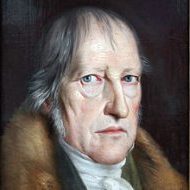
Author:
-
270
That the purpose of the state is the universal interest as such, and within this, as its substance, the preservation of particular interests, is, first, its abstract actuality or substantiality; but this is, second, its necessity, in that it diremps itself into the differences, determined by the concept, of its activity, which, through that substantiality,…
-
271
The political constitution is, in the first place: the organization of the state and the process of its organic life in relation to itself, in which it differentiates its moments within itself and develops them into subsistence. Secondly, the state is, as an individuality, an exclusive unit, which thereby relates itself to others, and thus…
-
272
|274| I. The Internal Constitution as such The constitution is rational in so far as the state differentiates and determines its activity within itself according to the nature of the concept, and indeed in such a way that each of these powers is itself, within itself, the totality, in that it has the other moments…
-
273
|277| The political state thus diremps itself into the substantial differences:a) the power to determine and establish the universal — the legislative power;b) the subsumption of the particular spheres and individual cases under the universal — the governmental power;c) subjectivity as the ultimate decision of the will — the power of the crown, in which…
-
274
Since spirit is actual only as that which it knows itself to be, and the state, as the spirit of a people, is at the same time the law permeating all its relations, as well as the customs and the consciousness of its individuals, the constitution of a specific people depends in general on the…
-
275
|282| a. The Power of the Crown The power of the crown itself contains within it the three moments of the totality (§ 272): the universality of the constitution and the laws; deliberation as the referring of the particular to the universal; and the moment of ultimate decision, as self-determination, into which everything else reverts…
-
276
1. The basic determination of the political state is substantial unity as the ideality of its moments, in which α) its particular powers and functions are as much dissolved as preserved, and are preserved only in such a way that they possess no independent authority, but only such and so much authority as is determined…
-
277
β) |283| The particular functions and activities of the state, being essential moments of it, are proper to it, and are attached to the individuals by whom they are administered and exercised not in virtue of their immediate personality, but only in virtue of their universal and objective qualities; they are therefore connected with particular…
-
278
These two determinations — that the particular functions and powers of the state are neither self-sufficient and fixed in themselves nor in the particular will of individuals, but have their ultimate root in the unity of the state as their simple self — constitute the sovereignty of the state. This is sovereignty internally; it has…
-
279
2. Sovereignty — at first merely the universal thought of this ideality — exists only as the self-certain subjectivity, and as the abstract, and to that extent groundless, self-determination of the will, in which the ultimate moment of decision resides. This is the individuality of the state as such, which is itself thereby only one.…
-
280
3. This ultimate self of the will of the state is, in this its abstraction, simple, and hence immediate individuality; in its very concept, therefore, lies the determination of naturalness. The monarch is accordingly essentially determined as this individual, abstracted from all other content, and this individual is destined for the dignity of monarch in…
-
281
|292| Both moments in their undivided unity — the ultimate, groundless self of the will, and the likewise groundless existence bound up with it, a determination consigned to nature — this Idea of that which is unmoved by arbitrary will constitutes the majesty of the monarch. In this unity lies the actual unity of the…
-
282
|294| From the sovereignty of the monarch flows the right of pardon for criminals, for to it alone belongs the actualization of the power of spirit to make undone what has been done, and to annihilate the crime through forgiving and forgetting. The right of pardon is one of the highest acknowledgments of the majesty…
-
283
The second element contained in the power of the crown is the moment of particularity, or of determinate content, and of its subsumption under the universal. Insofar as this attains a particular existence, it consists of supreme advisory bodies and individuals who bring the content of current affairs of state, or of legal determinations rendered…
-
284
In so far as the objective element of a decision — the knowledge of its content and circumstances, and the legal and other grounds that determine it — alone is capable of responsibility, i.e. of a proof of objectivity, and can therefore pertain to a deliberative body distinct from the personal will of the monarch…
-
285
The third moment of the power of the crown concerns the universal in and for itself, which, from a subjective point of view, consists in the conscience of the monarch, and, from an objective point of view, in the whole of the constitution and the laws; the power of the crown accordingly presupposes the other…
-
286
The objective guarantee of the power of the crown — of the legal succession through the hereditary nature of the throne, etc. — lies in the fact that, just as this sphere has its own actuality distinct from the other moments determined by reason, so too the other moments have, for themselves, the specific rights…
-
287
|298| b. Governmental Power Distinct from decision is the execution and application of the decisions of the crown, and in general the carrying-on and maintenance of what has already been decided — the existing laws, institutions, arrangements for common ends, and the like. This business of subsumption in general is comprised within governmental power, under…
-
288
|299| The communal particular interests which fall within civil society and lie outside the universal of the state that is in and for itself (§ 256) have their administration in the corporations (§ 251) of the local communities and of other trades and estates, and in the latter’s authorities, presiding officers, administrators, and the like.…
-
289
The maintenance of the universal interest of the state, and of legality, within these particular rights, and the reduction of the latter to conformity with the former, require oversight and care on the part of delegates of governmental power — the executive state officials — and of the higher deliberative bodies, which are constituted on…